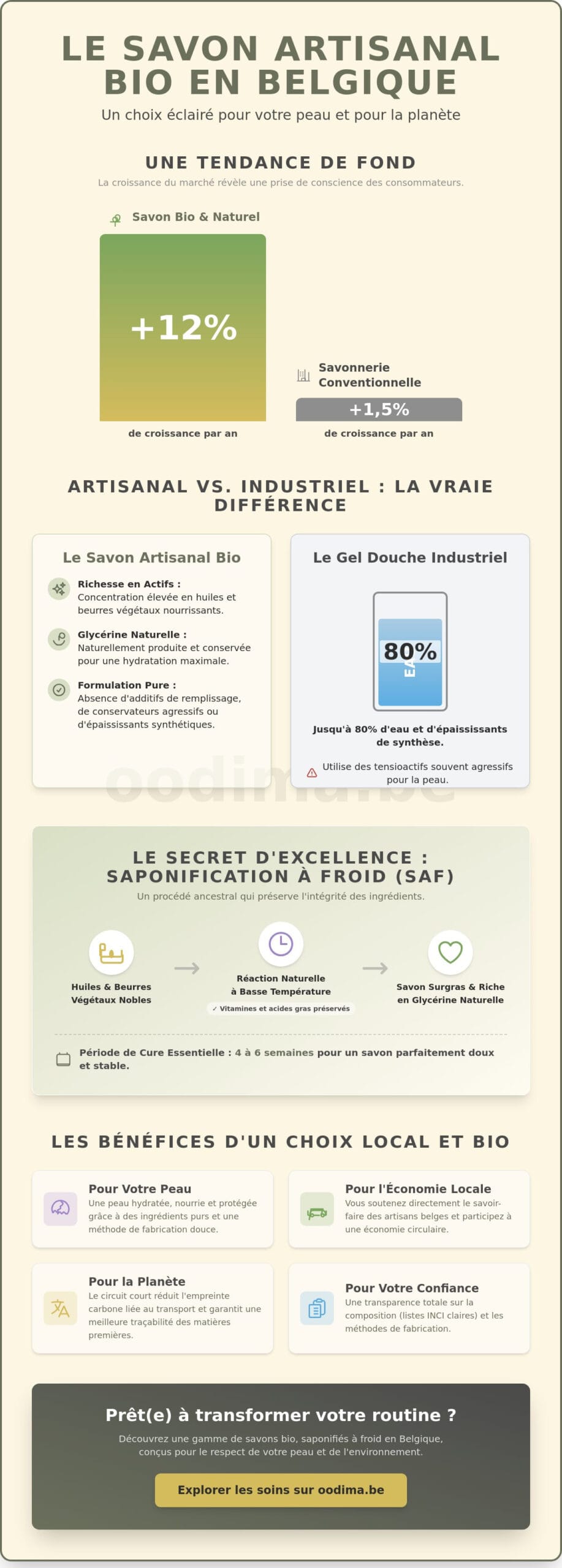
Did you know that the organic and natural soap segment is now growing at a rate of 12% a year, while conventional soapmaking is levelling off at just 1.5%? This acceleration testifies to Belgian consumers’ growing awareness of opaque ingredient lists and the persistent greenwashing of major brands. You’ve no doubt already experienced that uncomfortable, dry skin sensation caused by the aggressive surfactants in industrial shower gels. For anyone wishing to combine dermatological health, transparency and support for the local economy, finding a committed Belgian organic soap producer becomes a priority.
We understand your need for clarity in a market saturated with often vague promises. This article promises to simplify your approach by identifying craftsmen who place integrity and safety at the heart of their expertise. Together, we’ll look at the benefits of cold saponification, the new requirements of the 2026 European Omnibus VIII regulation, and the criteria for certification. You’ll discover how to transform your daily skincare routine into a gesture of pure well-being, while promoting short, ethical supply chains.
Key points
- Understand the positive impact of the short circuit on the environment and the importance of supporting the know-how of artisan soap-makers within the Belgian economy.
- Discover why cold saponification is the benchmark technique for preserving natural glycerine and guaranteeing perfectly moisturized skin.
- Learn how to decipher INCI lists and certification labels to identify a genuine Belgian organic soap producer committed to purity.
- Explore our solutions for a 100% natural liquid soap, combining ease of use with a formulation free from synthetic surfactants.
- Familiarize yourself with the criteria of excellence and transparency that define protective care for daily hygiene that respects your health.
Table of contents
Cold saponification: the technical excellence of Belgian craftsmanship
How can you identify a genuine artisanal organic soap manufacturer?
Why choose an organic soap producer in Belgium?
Choosing an organic soap producer in Belgium means above all choosing ethical consistency and dermatological performance. In a country where the consumption of organic products will reach 1.3 billion euros by 2024, the act of buying becomes a powerful lever for supporting local structures on a human scale. Opting for a national short circuit is more than just a consumer trend. It’s an approach that guarantees exceptional product freshness, far from the industrial stocks that sometimes stagnate for months in logistics warehouses before reaching your bathroom.
The ethics of the national short circuit
Belgium’s “short circuit” model drastically reduces the number of intermediaries and unnecessary transport. By choosing a local manufacturer, you directly contribute to reducing the carbon footprint of cross-border transport. This proximity creates a unique relationship of trust. Belgian consumers can get clear answers about the origin of raw materials, often from direct partnerships with farmers who respect biodiversity. This total transparency ensures that every euro invested truly supports the circular economy of our regions, while promoting organic production standards that protect our soil and water.
Quality vs. quantity: the choice of craftsmanship
Human-scale production offers a level of quality control that mass industry simply can’t match. An artisanal Belgian organic soap producer focuses on the richness of its formulation rather than on optimizing filling costs. Where conventional shower gels use up to 80% water and synthetic thickeners to create the illusion of texture, the artisan favors a high concentration of active ingredients.
No additive fillers: No unnecessary texturing agents or harsh preservatives.
Rich in vegetable oils: Use of noble butters and oils that truly nourish the epidermis.
Process control: Each batch is checked by hand, guaranteeing maximum dermatological safety.
This artisanal approach preserves the integrity of the ingredients. Traceability is crystal-clear, from the plant to the final bottle. You benefit from a living skin care product, rich in natural nutrients, that respects your skin’s hydrolipidic film. It’s this meticulous attention to detail that transforms a simple shower into a veritable ritual of protective, regenerating care.
Cold saponification: the technical excellence of Belgian craftsmanship
Cold saponification (SAF) represents the pinnacle of know-how for any Belgian organic soap producer concerned about skin health. Unlike industrial methods which heat soap pastes to over 100°C for several days, SAF is a natural chemical reaction where the oils or fats used meet the strong base used (sodium hydroxide for solid soaps and potassium hydroxide for liquid soaps). The term cold process means that the fatty acids (butter or oil) are not heated. This age-old process preserves all the nutritional properties of the vegetable oils and butters used. By avoiding excessive heat, vitamins and essential fatty acids remain intact, transforming a simple hygienic gesture into a truly protective treatment.
The chemical process explained simply
The magic happens when the fats meet a soda solution to produce solid soaps, and a potash solution for liquid soaps. The craftsman mixes these elements with millimetric precision. Once the reaction is complete, the soda (or potash) disappears completely, leaving the soap and, above all, the native glycerine in its place. Patience is a key ingredient here. Cold-saponified soap requires a curing period of four to six weeks. This natural drying time guarantees a soft, stable and long-lasting finished product. To check whether your manufacturer uses this method, look for the words “saponifié à froid” (“cold-saponified”) or the total absence of industrial pellets in their manufacturing specifications.
The dermatological benefits of cold process soap
The major advantage of this technique lies in the preservation of glycerine. In conventional industry, this precious substance is often extracted and sold separately in expensive creams. Belgian craftsmanship, on the other hand, leaves it at the heart of the product. Glycerine acts as a natural humectant, drawing water into skin tissue. The concept of “surgras” reinforces this action: part of the oils is not transformed into soap and remains available to nourish the skin’s hydrolipidic film.
This approach is crucial for complying with regulations on cosmetic ingredients and ensuring maximum safety. It offers an ideal solution for atopic, dry or chronically irritated skin. By eliminating synthetic surfactants, the risk of allergies is drastically reduced. For those who prefer a fluid texture, you’ll find that the same high standards of purity are applied to every organic liquid soap, created with the same rigorous craftsmanship. It’s the assurance of a daily hygiene that never strips the epidermis, but accompanies it towards lasting balance.
How can you identify a genuine artisanal organic soap manufacturer?
Distinguishing between a passionate artisan and a simple reseller requires a certain amount of vigilance. A genuine Belgian organic soap producer, such as Oodima, doesn’t just affix an elegant label to a kraft wrapper. It must be able to prove the traceability of each ingredient, and provide proof of the existence of a laboratory registered with the relevant authorities. In Belgium and throughout Europe, Regulation (EC) no. 1223/2009 imposes strict rules on the marketing of all cosmetic products. The formula must first be validated by a toxicologist, and a DIP (product information file) is drawn up and then filed on a European platform, the CPNP (cosmetics notification portal). The next step is compliant labeling, with compulsory information. It is essential to include the name and address of the person responsible for placing the cosmetic product on the market, the list of ingredients written according to the INCI nomenclature (International nomenclature of cosmetic ingredients), the contents by weight or volume, the batch number and precautions for use, the DDM (date of minimum durability) or PAO (period after opening). This is the first guarantee of safety and professionalism for your health. You need to check whether the cosmetic product you wish to buy bears these indications. If it doesn’t, get out!
Deciphering labels: a survival guide
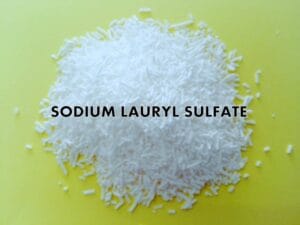
Learning to read the INCI list is essential to avoid marketing pitfalls. Avoid products containing sulfates such as Sodium Lauryl Sulfate or Sodium Laureth Sulfate, often used as cheap foaming agents but highly irritating to the hydrolipidic film. Also, beware of the generic term “fragrance” if it doesn’t specify natural origin, as it can mask phthalates. Since May 1, 2026, the Omnibus VIII regulation strictly prohibits certain CMR substances such as o-Phenylphenol in cosmetics sold in Europe. Ethical craftsmen will always prefer pure essential oils or certified natural fragrances.
Producer certifications and commitments
It’s important to know that the word “organic” in cosmetics is completely unregulated, unlike its use in food, where European regulations exist and are very strict.
The word “organic” in cosmetics is used all over the place and doesn’t mean much, and the consumer can’t be sure, given the incessant greenwashing that goes on all the time.
The only way for producers to do this is to obtain organic certification, which means they have to undergo an annual audit to verify and certify that their cosmetics are indeed organic.
Labels are invaluable for validating a manufacturer’s commitment and protecting consumers.
You have independent labels such as Nature et Progrès, Natrue, Cosmebio, Cosmos Organic and several control bodies to ensure this transparency: Certisys (a Belgian subsidiary of Ecocert), Cosmecert, Bureau veritas, TÜV Nord Integra, BDIH, ICEA, Soil Association…
Oodima has chosen the Cosmos Organic label.
- COSMOS Organic: This label guarantees that at least 95% of plant ingredients are of natural origin, and at least 10% for rinsed products are organically grown.
At Oodima, we use 16.5% organically grown ingredients!
Beyond the logo, look at the company’s structure. An independent Belgian producer controls the entire value chain, from formulation to packaging. Belgian consumers’ growing interest in organic products reflects a clear commitment to authenticity and quality. Choosing a local artisan means ensuring that your daily hygiene doesn’t compromise between dermatological efficacy and environmental ethics.
Liquid or solid soap: Oodima know-how for every need
The choice between a solid and a liquid format should never be a trade-off between convenience and health. As a producer of organic liquid soap in Belgium, we can see that habits are changing. While solid soap is booming, now accounting for 42% of the market by volume thanks to the “Zero Waste” movement, liquid soap remains a must-have for many Belgian households. The challenge for a conscientious craftsman is to offer the same dermatological quality, whatever the container chosen. We have chosen containers that are 100% recycled and recyclable, and we also offer refills and bulk products for professionals.
Natural liquid soap: a technical feat
Formulating a liquid soap without resorting to synthetic surfactants such as sodium laureth sulfate is a real challenge. Most industrial products use these cheap foaming agents, which end up damaging the skin barrier and polluting aquatic environments. At Oodima, we have developed a specific method for obtaining a creamy texture and generous foam solely from the saponification of noble vegetable oils.
Our creations retain all their native richness without the addition of synthetic thickeners or polymers. This purity ensures that the product does not dry out the skin, even after frequent hand washing. To find out more, read our detailed analysis: Why choose 100% natural liquid soap? It’s the perfect alternative for those who appreciate the convenience of a pump bottle, but demand impeccable composition.
Solid soap: authenticity rediscovered
Solid soap embodies the very essence of sustainable craftsmanship. It’s the ultimate ally for reducing your plastic footprint while saving money. A bar of handmade soap lasts on average two to three times longer than a bottle of conventional shower gel, provided you follow a few simple rules. To make your organic soap last, use a perforated soap dish. Leaving soap to air-dry between uses prevents premature softening and preserves its structure.
Beyond the ecological aspect, the solid format is remarkably gentle on the face. Its natural glycerine concentration and surgras make it an effective cleanser that respects the most sensitive areas of your skin. It eliminates impurities without causing tightness, a rare quality for urban skin often attacked by limescale and pollution.
What’s more, if you find that your skin remains reactive despite the use of gentle products, it may be worth tackling water hardness at source. In Belgium, innovative solutions such as Hydrokube neutralize limescale in an environmentally-friendly way, preserving the skin barrier while optimizing the effectiveness of your organic soaps.
Adapting your routine is child’s play. You can use the liquid format for quick hand hygiene or a morning shower, and reserve the solid soap for deeper face and body care in the evening. This complementarity allows you to benefit from the best of Belgian craftsmanship at every moment of the day. If you’d like to discover all our creations, feel free to explore our range of cold-saponified soaps for a unique sensory experience.
For those wishing to extend this sensory experience beyond the bathroom, you can find out more about Flava Car Scents and discover how their high-end fragrances can transform the atmosphere of your vehicle.
Oodima: your trusted Belgian producer for pure hygiene
The Oodima adventure was born of a clear ambition driven by Sylvie and Stéphane: to reconcile high-tech cosmetics with the authenticity of local craftsmanship. As a producer of organic liquid soap in Belgium, our mission goes beyond the simple manufacture of a hygiene product. We have designed a structure in which every stage, from formulation in the laboratory to bottling, is guided by a demand for absolute purity. This vision is embodied in a human-scale production facility located in the heart of the Liège region, systematically favoring short distribution channels to guarantee optimum freshness and traceability.
Our values at the service of your skin
At Oodima, we firmly believe that specialization is the key to excellence. That’s why we’ve made a conscious decision not to spread our know-how too thinly. This decision allows us to focus 100% of our research and energy on body and hand care, and in the near future to offer you a real liquid shampoo of equally high quality, also made from certified organic ingredients and as local as possible.
Our commitment is based on rigorous ethical principles:
Certification and naturalness: All our products are made with 100% natural ingredients, with no compromise on dermatological safety.
Total transparency: We explain every ingredient in our formulas so you know exactly what nourishes your skin.
Respect for the environment: Our manufacturing process limits waste and promotes a sustainable circular economy within the Belgian territory.
Every Belgian liquid soap that leaves our workshop is the fruit of a balance between respect for saponification traditions and the strictest modern safety standards. We continually invest in our infrastructure to offer you a stable, healthy product of consistent quality.
Join the Oodima community
Becoming an Oodima customer means joining a community of conscious consumers who refuse to be greenwashed. We don’t just sell soap; we support you with expert advice on setting up a healthy, protective beauty routine. Whether you’re in Liège, Brussels or anywhere else, access to superior hygiene has never been easier. We ensure fast, careful delivery throughout Belgium and the European Union, always taking care to minimize the logistical impact of our shipments.
Choosing an organic liquid soap producer in Belgium like Oodima means choosing a partner who cares for your health as well as the planet. We invite you to rediscover the pleasure of naturally moisturized, soothed skin thanks to our unique formulations.
Discover our full range of handcrafted organic soaps and experience the transparency that transforms your daily life.
Towards ethical and transparent hygiene in Belgium
Adopting the skincare products of a local artisan radically transforms your approach to daily hygiene. By giving priority to the technical mastery of cold saponification, you offer your skin the richness of preserved glycerine and a protective surgras. Identifying a top-quality Belgian organic soap producer now requires total transparency, from rigorous reading of INCI lists to compliance with European safety standards. Whether your preference is for the creaminess of a liquid soap or the authenticity of a solid bar, the most important thing is the purity of the ingredients and the rejection of inexpensive synthetic surfactants such as SLS and SLES.
This transition to conscious beauty supports your dermatological health while promoting a sustainable economic model that respects our environment. It’s a lifestyle choice in which every act of skincare becomes an act of kindness for yourself and for nature.
Discover the excellence of Belgian organic soap at Oodima. Our formulations are certified 100% natural and organic, derived from artisanal cold saponification. We ensure fast delivery in Belgium and throughout the European Union to guarantee an uncompromising skincare experience. Pamper yourself with the integrity your skin deserves.
Frequently asked questions about artisanal soapmaking
What is cold-saponified soap and what are its benefits?
Cold-saponified soap is a cleansing product made without excessive heating to preserve the nutrients in the vegetable oils. This artisanal method naturally preserves glycerine, a precious moisturizing agent often removed from industrial products. By choosing such a product, you benefit from gentle cleansing that respects your skin’s lipid balance while reducing your environmental impact.
How do you know if a soap is really organic in Belgium?
To check the authenticity of a certified organic soap in Belgium, look for official labels such as COSMOS Organic, Natrue or Nature & Progrès on the packaging. These certifications guarantee that an independent body has checked the origin of ingredients and production methods. Genuine **producers of**organic soapin Belgium display these logos in full transparency, and make their certificates available on request.
Is organic liquid soap as effective as solid soap?
Organic liquid soap is just as effective as its solid version if formulated without synthetic surfactants. The difference lies mainly in the method of use and the texture, as both formats perfectly eliminate impurities and bacteria. At Oodima, our liquid versions are designed to offer impeccable hygiene while providing the ease of use you need for your daily routines.
Why are Belgian handmade soaps more expensive than supermarket soaps?
The high prices of Belgian handcrafted soaps are explained by the use of noble raw materials and the long production time. Unlike mass-produced products, which use animal fats or cheap filler oils, the artisan uses high-quality organic vegetable oils. What’s more, the weeks-long curing process and skilled local workforce represent a necessary investment to guarantee superior dermatological safety.
Are your soaps suitable for very sensitive or atopic skin?
Our soaps are perfectly suited to very sensitive or atopic skin, thanks to their minimalist composition and their natural richness in glycerine. The absence of synthetic colorants, sulfates and harsh preservatives considerably reduces the risk of allergic reactions or tightness. We particularly recommend our essential oil-free ranges for the most reactive epidermis, to ensure maximum tolerance.
Where are Oodima soaps made?
All Oodima products are handcrafted in our workshop in the Liège region. As a Belgian organic soap producer, we control the entire production chain, from oil selection to final labeling. This local presence enables us to guarantee an authentic short circuit and to actively support local craftsmanship.
Do your soaps contain palm oil?
We have made the ethical choice not to use palm oil in our formulations, even if it is certified sustainable. We prefer to use ingredients such as shea butter or coconut oil to obtain a generous lather and creamy texture. This radical refusal contributes to the fight against deforestation and guarantees a finished product in perfect harmony with our values of environmental preservation.
How to store solid soap so that it lasts longer?
To prolong the life of your solid soap, it’s crucial to let it dry completely between uses. Ideally, you should use a wooden, ceramic or stainless steel soap dish with an openwork design that allows water to drain freely. Avoid leaving it in a damp area of the shower where water stagnates, as this will soften the paste and accelerate its consumption prematurely.